👋 Meet the team

Luminița DUMĂNESCU, PI
Leading researcher (R4) at the Centre for Population Studies in Cluj-Napoca, with interests in social history of medicine, family and childhood history and digital humanities. Member in numerous national and international projects, she was the principal investigator for several national projects, The most significant results under her supervision were obtained during the implementation of HPDT project, 2014-2017 (hpdt.ro). Currently, under Luminita’s coordination, Centre for Population Studies is developing the Transylvanian Health Database (trhd.ro), a tool designated to document the spread of medicalization in Transylvania, both from the perspective of providers (public healthcare availability, medical staff and institutions) but also from the perspective of the beneficiary – the patients.
Oana-Valentina SORESCU-IUDEAN
Oana Sorescu-Iudean is a researcher at the Centre for Population Studies in Cluj-Napoca, focusing on the social and economic history of primarily German-speaking communities of eighteenth and nineteenth century Transylvania. She graduated with a PhD in History from the University of Regensburg (2021), where she was a member of the Graduate School for East and Southeast European Studies. Over the past decade, she has been involved in several projects integrating digital humanities approaches with East-Central European historical sources from the 18th to 20th centuries.
Recent papers (selected)
O. Sorescu-Iudean. “Keeping the City Alive: Managing Public Health Crises in the First Half of the Eighteenth Century in Sibiu”, in M. Pákucs, J. Derzsi (eds.), Towns between Empires: Good Governance and “Police” in Case Studies from Transylvania, Wallachia, and Moldavia, 1500s–1800s, CEU Press, 2025.
O. Sorescu-Iudean, V. Popovici, “Patterns of Romanian Women’s Civil and Political Engagement in Nineteenth- and Early-Twentieth Century Transylvania and Hungary” (w. Vlad Popovici), in Marta Verginella (ed.), Women, Nationalism, and Social Networks in the Habsburg Monarchy, 1848-1918, Purdue University Press, 2023, 65-86.
J. Pál, V. Popovici, O. Sorescu-Iudean, “Elites and Groups in East-Central and South-East-Europe in the Long Nineteenth Century. Foreword from the Editors” (w. Judit Pál, Vlad Popovici), in Judit Pál, Vlad Popovici, and Oana Sorescu-Iudean (eds.), Elites, Groups, and Networks in East-Central and South-East Europe in the Long 19th Century, Brill | Schöningh, 2022, 1-27.
O. Sorescu-Iudean. “Patterns in the Timing of Widows’ Remarriage in an 18th-Century Transylvanian City”, Romanian Journal of Population Studies, vol. XVI, Issue 2, 2022, 9-26.


Elena Crinela HOLOM
Dr. Elena Crinela Holom is a senior researcher at the Centre for Population Studies, specializing in historical demography and the history of Transylvanian families in the modern era. With extensive expertise in coding historical occupations and causes of death, her current research explores historical inequalities in mortality. She has also been member of multiple national and international research projects.
Nicoleta Maria HEGEDŰS
Nicoleta Hegedűs is a scientific researcher at the Center for Population Studies within Babeș-Bolyai University and at the “George Barițiu” Institute of History of the Romanian Academy, in Cluj-Napoca. She earned her degree in history in 2003 from the Faculty of History at UBB and obtained her PhD in 2010 with a dissertation titled “The Image of Hungarians in Romanian Culture in Transylvania (1867-1918),” under the supervision of Professor Sorin Mitu. Her recent research interests include, in addition to historical imagology, aspects of social history and historical demography, focusing primarily on analyzing causes of death in 19th-century parish registers, as well as studying the Transylvanian medical system in the second half of the same century.
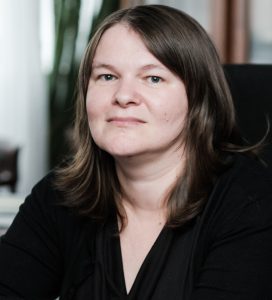

Daniela MÂRZA
Daniela Mârza is Senior researcher at Center for Transylvanian Studies of Romanian Academy, with a MA in Compared Modern History (2000) and a PhD in History (2011). Her scientific interest covers areas such as the modern history of Romania and universal modern history, contemporary history, history of education, church history, family history. Her PhD thesis was focused on the Greek-Catholic schools of the Archdiocese of Alba Iulia and Fagaras, with special attention given to the Romanian rural pedagogical elite – its formation, its organization and functioning as a professional and social category, its living and working conditions, its relations with the political and ecclesiastical authorities. Daniela Mârza was, also, part of the team which build the ”Historical Population Database of Transylvania”. Due to her involvement in various research projects, Daniela Mârza is well acquainted with project implementation, with working within complex teams.
She holds a solid research experience, due to her career as a researcher (2000 to present, at Center for Transylvanian Studies of the Romanian Academy); she holds an excellent knowledge of various types of archive sources.
Daniela Mârza is the author of two monographs, co-edited four anthologies and published more than 40 articles and academic studies; she attended, also, more than 35 national and international conferences.
Angie LUMEZEANU
Angela Lumezeanu is a Junior Researcher at Babeş-Bolyai University, Centre for Population Studies and software engineer at “George Bariţiu” History Institute of The Romanian Academy in Cluj-Napoca. She has a formal education in both History and Computer Science and has a solid experience working on DH projects, the best-known of which is the Historical Population Database of Transylvania.
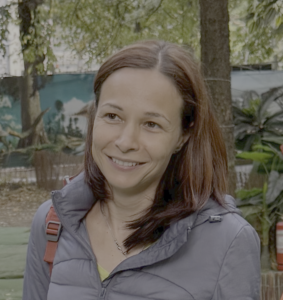
Mihai-Răzvan ATANASOV
Mihai-Răzvan Atanasov is a PhD student in Artificial Intelligence at Babeș-Bolyai University in Cluj-Napoca. His research focuses on machine learning and data mining methods, with particular interest in large language models and their applications for data transformation and knowledge extraction. His main research area is medical imaging, especially MRI data analysis using machine learning techniques. Within the project, he develops agentic AI workflows for automated data restructuring, using data-mining and AI-based methods to convert heterogeneous, unstructured registers into structured and analyzable datasets.